

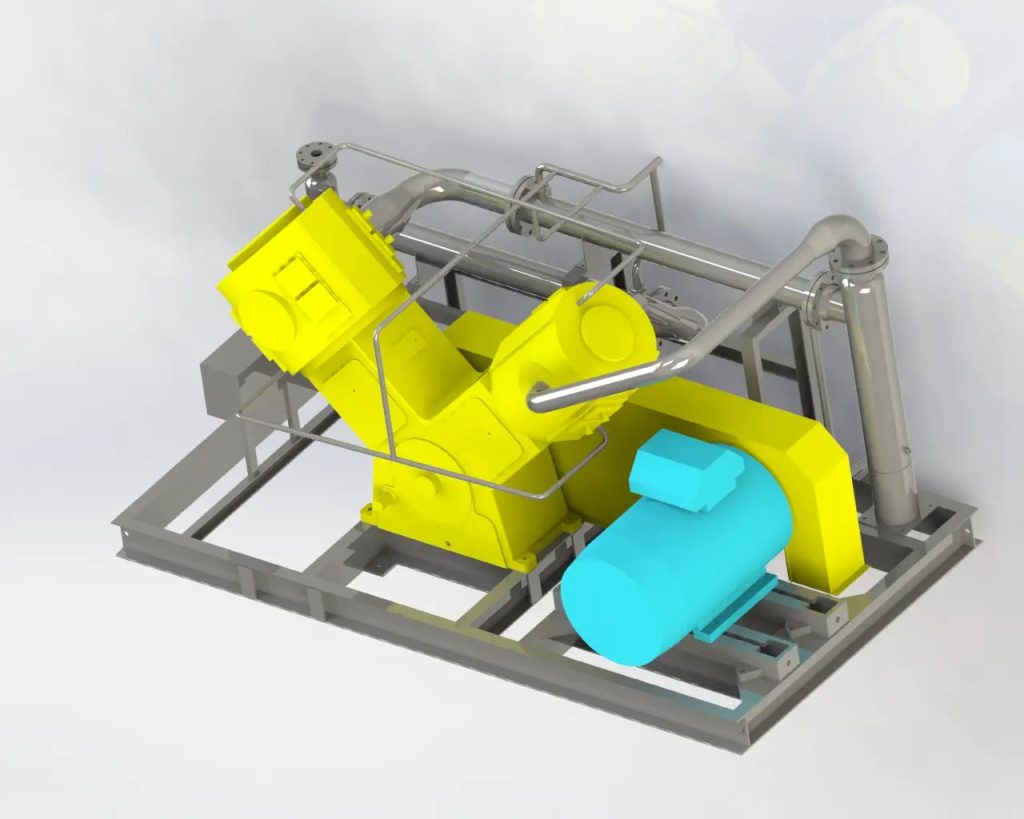
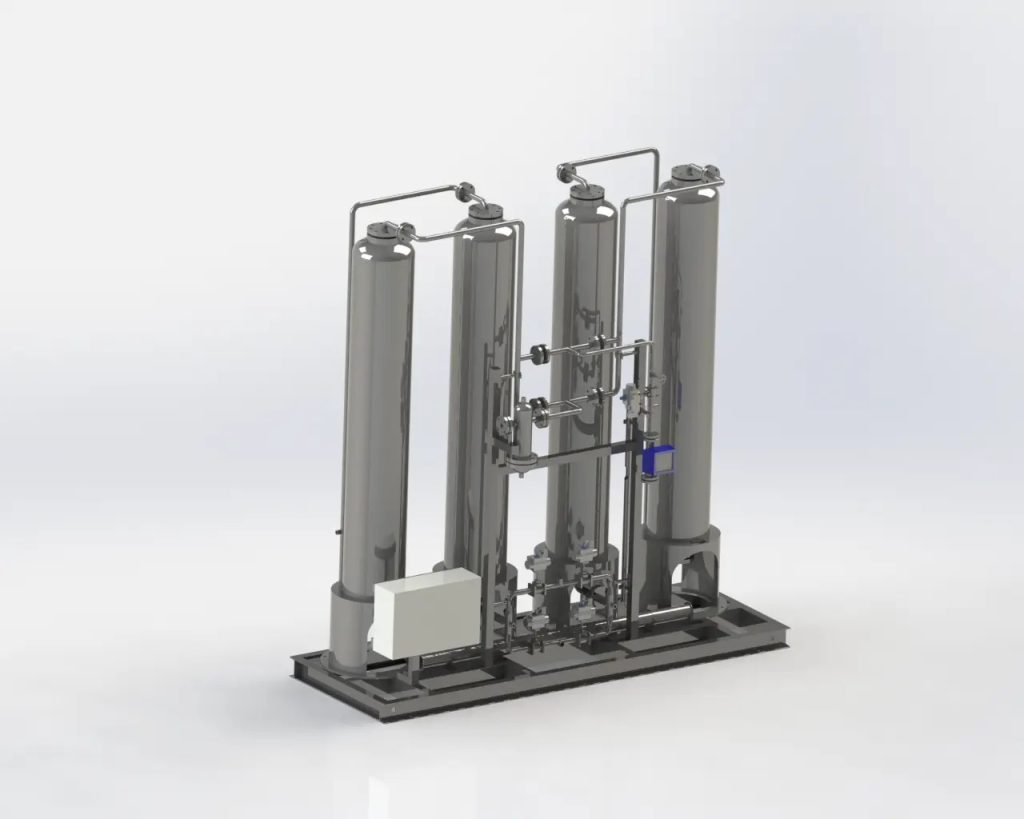
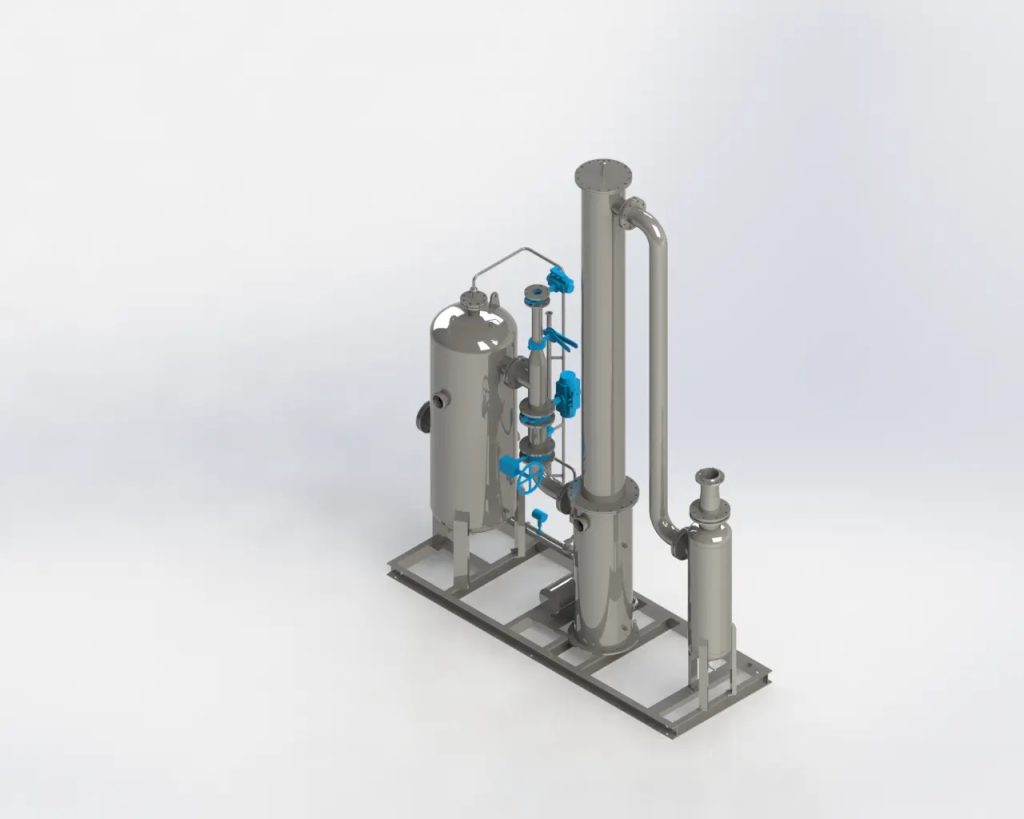
The Carbon Dioxide Recovery Unit (CRU) is a robust and reliable CO2 recovery solution that can be designed in-house from 8Kg/h to 20,000Kg/h. It is the global benchmark for CO2 recovery equipment in the brewing industry and is still running strong after 10 years.
The program offers a range of options, from cost-effective conventional CO2 recovery plants to those utilizing the latest technology. We listen carefully to your needs and design to meet your specific requirements: don’t worry, our engineers will find a solution for the most limited space conditions.
The purity of the liquid carbon dioxide end product exceeds general quality standards for food/beverage/ingredient use, including the latest edition of the ISBT standard. Recycling your own CO2 reduces your CO2 footprint and reduces the emission of volatile organic compounds into the atmosphere. Both contribute to a more sustainable operation.
A team of experienced and trained service engineers will install and commission customized solutions worldwide. Once commissioning is complete, we continue to work towards CO2 self-sufficiency. Through comprehensive lifecycle management, our technical support and service teams will ensure that your CRU is operating at its optimum.
At present, my country’s carbon dioxide products are mainly used in welding protection in mechanical processing and carbonic acid and beer beverage industries in the food field. As of the end of 2019, my country’s total carbon dioxide device production capacity exceeded 14 million tons. With the national energy conservation and emission reduction requirements and corresponding policy support and the expansion of carbon tax trading scale, the continued expansion of carbon dioxide production capacity is an inevitable trend. Expanding the application fields of carbon dioxide products is the focus of each enterprise.
Hello, your statement does not seem to be a complete sentence. I’m not sure what you want to say. If you want to ask about the development of artificial intelligence (AI) in education, then the current development of AI in education is mainly in the following areas:
- The use of AI technology to improve teaching efficiency. Teachers can use AI tools to assist in classroom teaching, and improve the efficiency and accuracy of teaching. For example, AI can help teachers automatically grade students’ homework and tests, and provide feedback to students in real time.
- The use of AI technology to customize teaching plans. AI can analyze students’ learning ability and interests, and customize teaching plans according to their characteristics, so as to better meet students’ needs.
- The use of AI technology to promote online education. Online education is more convenient and flexible, and can expand students’ knowledge scope. AI can also recommend and recommend teaching content according to students’ characteristics, interests and needs, and provide one-on-one tutoring services.
- The use of AI technology to evaluate and improve teaching quality. AI can collect data on students’ learning status and teachers’ teaching performance, analyze it, and then provide feedback and suggestions for teachers to continuously improve their quality and effectiveness of teaching.
However, in order to achieve these goals, we still need to face some challenges, such as how to ensure the accuracy and fairness of AI evaluation results, how to protect students’ privacy and personal information security, how to solve the technical problems of AI’s interaction with teachers and students, and so on. Therefore, we need to further study and explore the use of AI technology in education, and find appropriate solutions to these challenges through technical means or other methods.



 English
  Spanish
  Russian
  Korean
  Japanese
  German
  French