

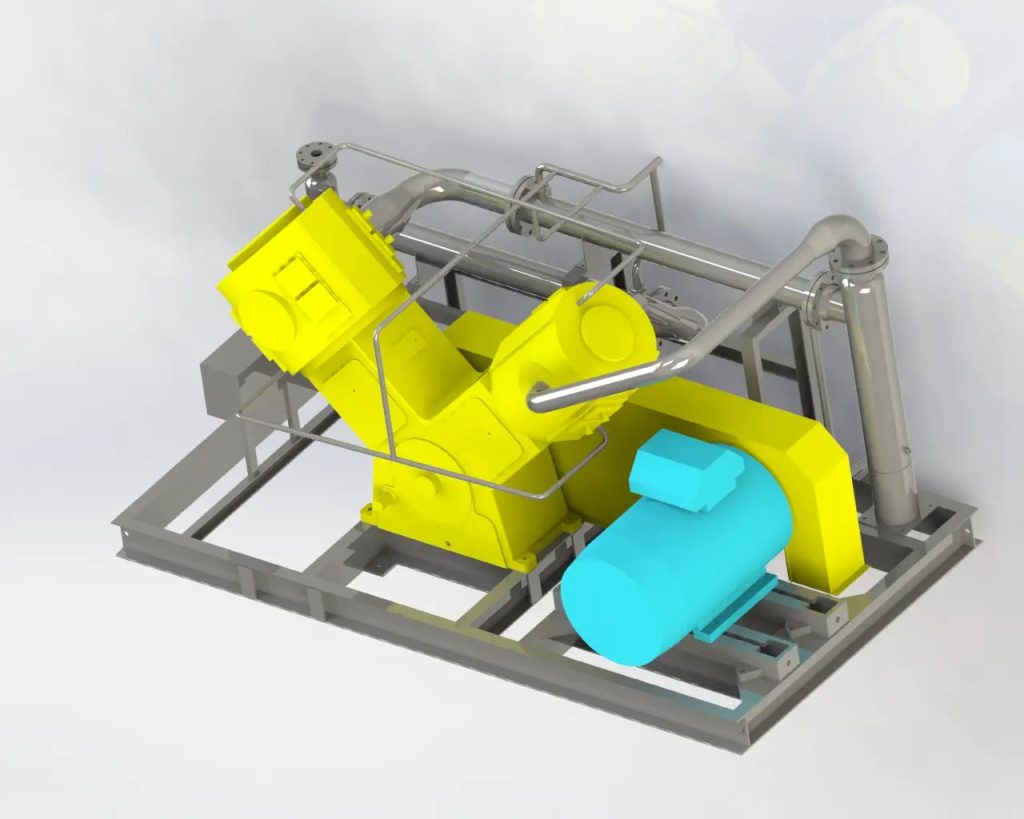
Including refrigeration unit and evaporation condenser, after purification of the gas under a certain pressure can only be liquefied under specific temperature conditions, the refrigeration unit is to provide enough cold for the liquefaction of carbon dioxide, in the evaporation condenser refrigerant and carbon dioxide gas heat exchange, carbon dioxide down to a certain temperature (-25 ° C) and then become liquid, sent to the storage tank for storage, while the gas that has not been liquefied, such as N2, O2 are discharged from the condenser. Refrigeration unit by the German Bitzer (Bitzer) compressor and refrigeration system components, refrigeration unit work and gas compressor operating capacity should be relative to the PLC for chain control, freezer for the screw-type refrigeration compressor has an energy regulator, energy regulation and compressor frequency synchronization, compressor frequency is high, the proportion of large energy regulator increased. Non-condensable gas is not directly empty waste, but is used as a pneumatic instrumentation drive and adsorption tower, drying tower regeneration, thus reducing the gas loss of the entire system, improve the carbon dioxide recovery rate.
Thank you very much for taking the time to learn about our products. We are confident that our products will be able to meet your needs and exceed your expectations. We are always committed to providing our customers with the highest quality service and the most efficient product solutions. If you have any questions about our products or need further assistance, please feel free to contact us. Our team will be on standby to ensure you have the best experience with our products. Thank you again for your interest and we look forward to building a long term relationship with you.
The liquefaction and recovery of carbon dioxide is a topic of important practical significance. Especially in industrial fields, such as steel, chemical industry, electric power and other industries, large amounts of carbon dioxide waste gas emissions have become a serious problem. Therefore, developing an effective carbon dioxide recovery system is the key to solving this problem.
In the carbon dioxide recovery system, the capture system and the conversion system are the two core parts. The main function of the capture system is to capture CO2 at high concentrations with high selectivity and stability. The conversion system can convert the captured carbon dioxide into chemicals such as methanol and acetic acid that can be used as new energy sources, or directly into renewable fuels.
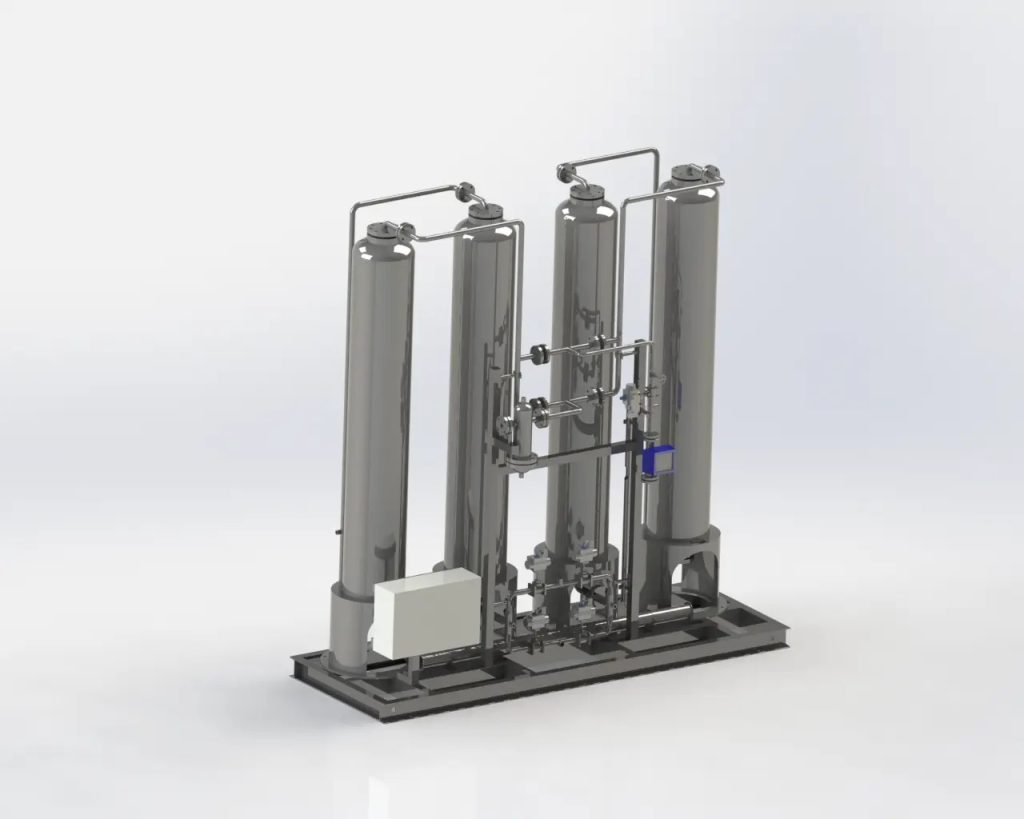
For the capture system, the key technology lies in how to improve the selectivity and capture efficiency of CO2. Currently, new capture systems mostly use advanced adsorbents and desiccants to achieve more efficient CO2 capture. Among them, activated carbon adsorbents are widely used due to their advantages of high adsorption capacity, high selectivity and regeneration. In addition, new molecular sieve adsorbents also have good application prospects, with higher adsorption rates and lower energy consumption.
Conversion systems convert captured carbon dioxide into valuable chemicals or fuels. In this process, the selection and use of catalysts are key. Currently, commonly used catalysts include noble metal catalysts (such as Pt, Au, etc.), alkaline earth metal oxide catalysts (such as MgO, CaO, etc.) and transition metal carbide catalysts (such as Fe3C, Co3C, etc.). In addition, new photocatalysts and electrocatalysts have also made significant progress in research.
In practical applications, single adsorption drying systems often have some problems, such as the adsorbent being easily saturated and regeneration energy consumption being high. Therefore, in response to these problems, researchers have proposed a new type of adsorption-membrane separation combined drying system. This system combines the high adsorption capacity of the adsorbent with the high selectivity of membrane separation, which can greatly improve the drying effect and energy saving effect.
Overall, the liquefaction and recovery of carbon dioxide is a complex and challenging topic. Through continuous optimization of technology and deepening of practice, I believe we can find more efficient, environmentally friendly and economical solutions.



 English
  Spanish
  Russian
  Korean
  Japanese
  German
  French